Table of Contents
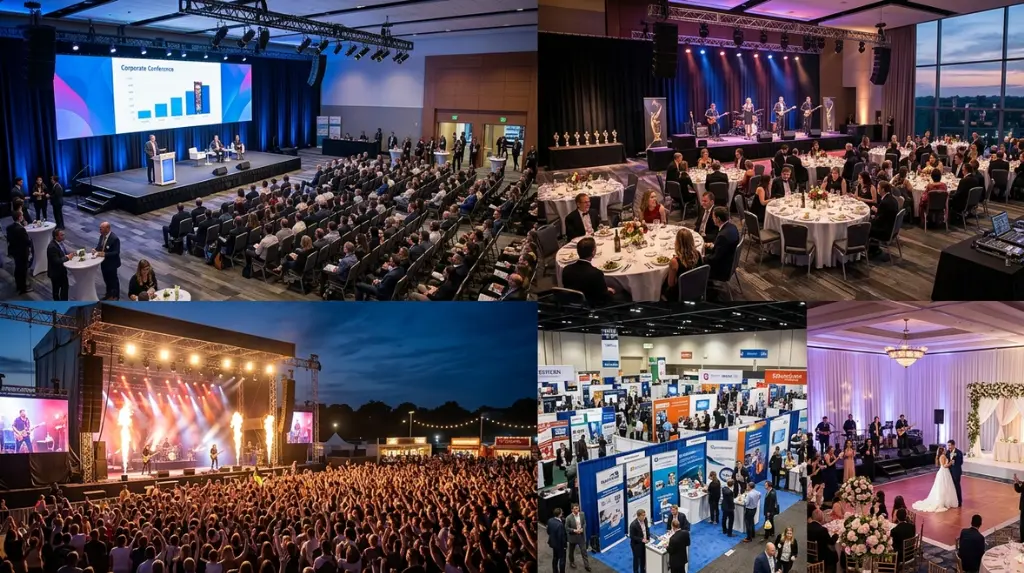
Types of events in event management refer to different categories of planned gatherings such as corporate events, conferences, exhibitions, promotional campaigns, social celebrations, and virtual programs organized to achieve marketing, networking, training, or entertainment objectives.
Successful corporate programs and brand campaigns require strategic Event Planning, where every stage — from concept development to execution — is aligned with business objectives.
In this expert guide, you will learn the 10 major types of events in event management, real examples, benefits, planning challenges, and how to choose the right event type for your business success.
Quick List: Major Types of Events in Event Management
- Corporate Events
- Conferences and Seminars
- Product Launch Events
- Exhibitions and Trade Shows
- Brand Activation Events
- Team Building Events
- Social Events
- Cultural Events
- Virtual and Hybrid Events
- Entertainment Events
Comparison Table – Event Types vs Business Goals
| Event Type | Primary Goal | Best For | ROI Potential |
| Corporate Events | Employee engagement | IT companies, startups | High |
| Conferences | Knowledge sharing | Industry leaders | Medium-High |
| Product Launch | Brand awareness | New businesses | Very High |
| Exhibitions | Lead generation | B2B companies | Very High |
| Brand Activation | Customer engagement | FMCG & retail | High |
| Team Building | Productivity | HR departments | Medium |
| Social Events | Celebration | Individuals | Emotional ROI |
| Cultural Events | Community bonding | Institutions | Medium |
| Virtual Events | Global reach | Tech companies | High |
| Entertainment | Audience attraction | Sponsors & brands | High |
1. Corporate Events
Corporate events are professionally organized business gatherings designed to improve employee motivation, networking, and brand positioning. Businesses planning large-scale corporate events in Bangalore often collaborate with experienced event management companies to ensure seamless execution and maximum employee engagement.
Common Corporate Event Types
- Annual day celebrations
- leadership meetings
- award ceremonies
- corporate retreats
Expert Insight
Corporate events significantly improve workplace culture and help companies retain employees. In cities like Bangalore, IT firms regularly invest in large-scale employee engagement events.
2. Conferences and Seminars
Conferences focus on knowledge sharing, training programs, and industry networking.
Planning Challenges
- Venue logistics
- speaker management
- technical setup
- attendee coordination
Business Benefits
- Builds industry authority
- increases partnership opportunities
- enhances brand credibility
3. Product Launch Events
Product launch events help companies introduce new offerings to customers, investors, and media.
Real Example
A Bangalore startup launching a SaaS product may organize a media launch event with live demos, influencer engagement, and networking sessions.
ROI Impact
- Generates immediate brand visibility
- attracts investor interest
- increases sales enquiries
4. Exhibitions and Trade Shows
Trade shows are powerful B2B marketing platforms where businesses showcase products and services.
Benefits
- direct lead generation
- competitor benchmarking
- market research
Exhibition stall design and interactive demos can significantly increase visitor engagement.
5. Brand Activation Events
Brand activation campaigns focus on experiential marketing strategies that create emotional customer connections.
Popular Formats
- mall activations
- roadshows
- sampling campaigns
Marketing Advantage
These events increase brand recall and help companies stand out in competitive markets.
6. Team Building Events
Team-building programs improve collaboration, leadership skills, and workplace productivity.
Activities
- adventure challenges
- outdoor retreats
- fun engagement workshops
HR departments consider these events essential for employee retention.
7. Social Events
Social events include weddings, private celebrations, and milestone functions managed by professional planners.
Value
- stress-free event execution
- Corporate Event Themes
- memorable guest experiences
8. Cultural Events
Cultural programs celebrate traditions, arts, and community identity.
Examples
- festival events
- college cultural fests
- community celebrations
These events strengthen social bonding and heritage awareness.
9. Virtual and Hybrid Events
Hybrid events combine physical and digital participation, allowing businesses to reach global audiences.
Advantages
- cost efficiency
- wider participation
- flexible scheduling
Many companies now prefer hybrid conferences for scalability.
10. Entertainment Events
Entertainment events focus on large audience engagement and brand sponsorship visibility.
Examples
- music concerts
- celebrity shows
- award nights
These events attract mass attention and media coverage.
How Event Planners Choose the Right Event Type
Professional event managers analyze:
- Business objectives
- target audience profile
- event budget
- expected marketing ROI
- brand positioning strategy
Using a detailed Event Planning Checklist helps organizations make informed decisions and achieve successful outcomes.
Event Planning Checklist for Businesses
| Planning Factor | Why It Matters |
| Define event goals | Ensures strategic direction |
| Set budget | Avoids overspending |
| Choose right venue | Impacts guest experience |
| Plan marketing strategy | Drives attendance |
| Hire professional planners | Ensures smooth execution |
| Measure ROI | Improves future events |
Event Cost vs ROI Insight
Businesses often hesitate to invest in events due to cost concerns. However, well-executed events can deliver:
- strong brand exposure
- quality lead generation
- improved employee satisfaction
- long-term customer relationships
The return on investment depends on planning quality and execution strategy.
Future Trends in Event Management (2026)
- Hybrid events becoming standard
- AI-driven attendee engagement
- sustainable event practices
- personalized guest experiences
- data-driven event marketing
Companies adopting these trends gain competitive advantage.
Conclusion
Understanding the different types of events in event management helps businesses choose the most effective event strategies to achieve marketing goals, strengthen employee engagement, and drive brand growth. From corporate conferences to brand activation campaigns, selecting the right event format plays a crucial role in delivering measurable results.
Partnering with experienced professionals ensures seamless execution, better return on investment, and memorable event experiences. If you are looking for the Best event management company in Bangalore, IVNO Events offers end-to-end event planning solutions tailored for corporate events, product launches, exhibitions, and brand activations. With a strategic approach, creative execution, and industry expertise, the team helps businesses organize impactful events that align with their objectives and audience expectations.
Frequently Asked Questions
What are the main types of events in event management?
The main event types include corporate events, conferences, exhibitions, product launches, brand activations, social celebrations, cultural programs, virtual events, and entertainment shows.
Which event type is best for business promotion?
Product launch events, exhibitions, and brand activation campaigns are highly effective for marketing and lead generation.
Why should companies hire professional event planners?
Event planners handle logistics, vendor coordination, budgeting, creative execution, and risk management, ensuring successful event outcomes.